In modern amateur radio, station automation is not just about convenience; it is, above all, about equipment safety and the key to achieving better results in contests. At SO9I Engineering, we are proud to present MOAS II (Mother of All Switches) – a system that redefines the way you manage antennas, filters, and amplifiers.
Heritage and innovation: SO9I modularity
MOAS II was originally designed by Paul K1XM as a powerful controller for advanced contest stations. At SO9I Engineering, we took it a step further. We built the system in a modular version, making it significantly more scalable and easier to service than the original design.
All our modules are designed for DIN rail mounting. This simplifies cable organization in control cabinets, on walls, or under the operator’s desk, ensuring a tidy and professional station appearance. Additionally, every control output is equipped with an LED diode, providing real-time feedback on the status of each relay.
System architecture: Modules for special tasks
Our system consists of specialized components that you can select based on your specific needs:
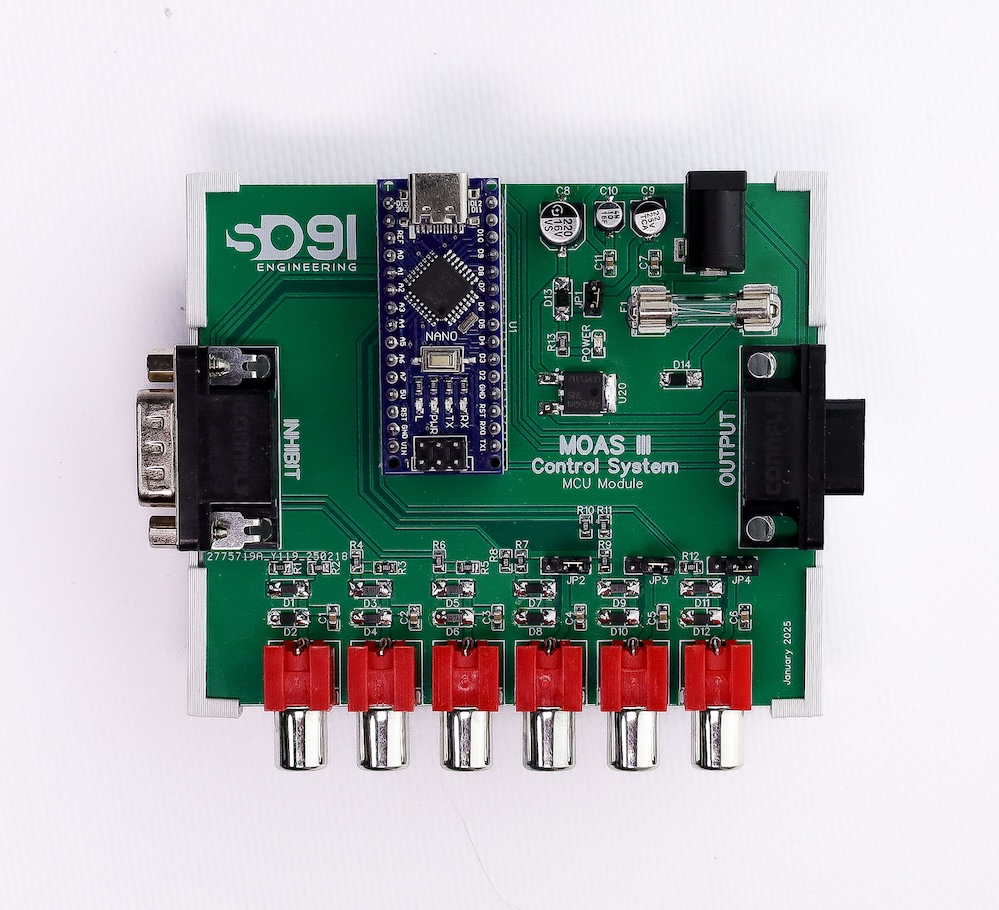
- MCU Module (Central Unit): The heart of the system, featuring a microprocessor that manages all communications. It includes 6 PTT connectors, allowing the system to monitor the transmit status of up to six radio stations simultaneously.
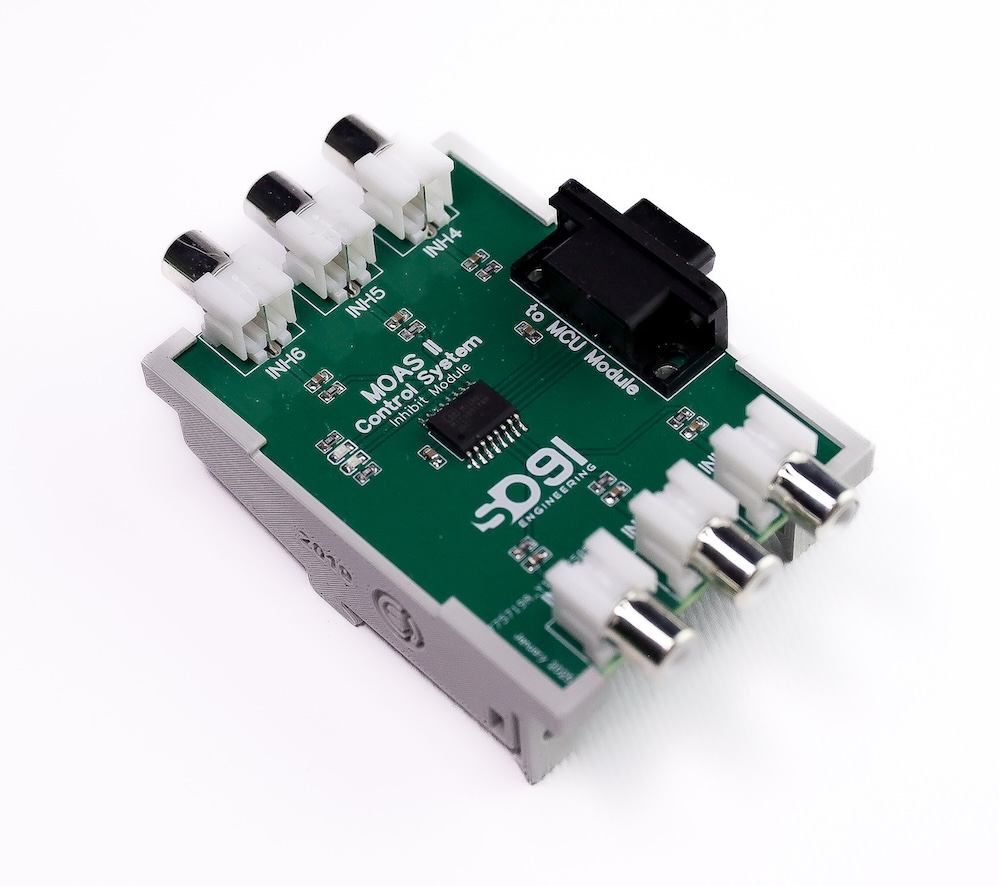
- Inhibit Module: Crucial for safety. It is used to block transmitters by providing +12V to RCA jacks, preventing transmission conflicts between radios.
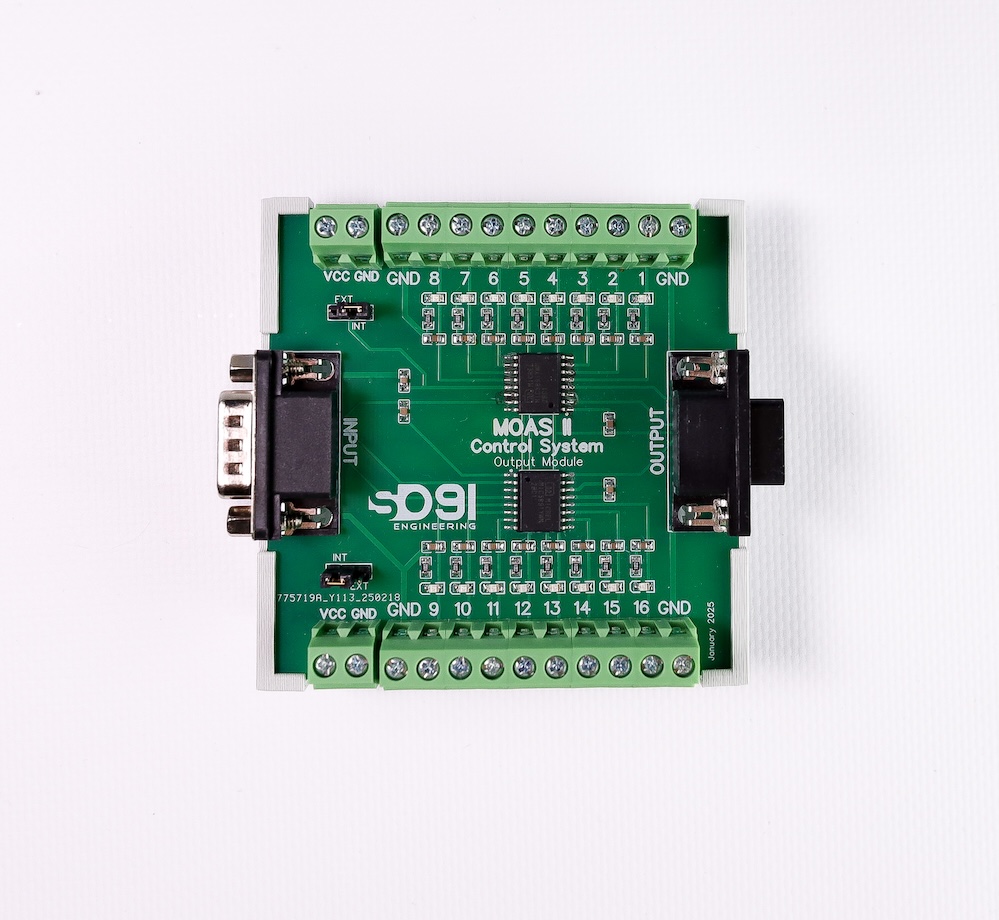
- 16 Output Module (Positive Voltage): Used to control relays and filters in the 5-30V DC range. It allows for the selection of internal voltage (+12V from the MCU) or external voltage for each section of 8 outputs independently.
- 16 Output Module (Sinking to Ground): Ideal for controlling PTT signals in amplifiers and HamPlus-type switches.
Unlimited scalability: From home to Multi-Multi
MOAS II is an incredibly versatile solution. It is perfect for small home stations using only one antenna switch, but its true power is revealed in large Multi-operator stations.
A single MCU module can handle up to 64 outputs, and the system allows for linking multiple MCU units. Theoretically, you can achieve up to 4,096 control outputs. This enables MOAS II to handle the most complex stack systems, 4-square antennas, or band-pass filter (BPF) switches.
Server, Client, and Remote Operation
The core of the system is the MOAS Server, which runs on a Windows PC. It communicates with the hardware via USB and manages station logic based on JSON configuration files.
By utilizing the TCP/IP protocol for communication between the server and client applications, MOAS II is an ideal solution for Remote stations. Using a VPN connection, an operator can manage the entire antenna system from anywhere in the world while maintaining full control over safety and transmit inhibits.
Full Integration with Logging Software
MOAS II integrates seamlessly with the most popular amateur radio software, such as:
- DXLog.net
- N1MM Logger Plus
- Win-Test
- WriteLog
- OmniRig
The system automatically retrieves frequency information from the radios, ensuring flawless antenna switching. Users can change antennas assigned to a band directly from the computer keyboard using shortcuts such as ALT+SHIFT+F11 in DXLog or ALT+F9 in N1MM+.
Mobile app and personalization
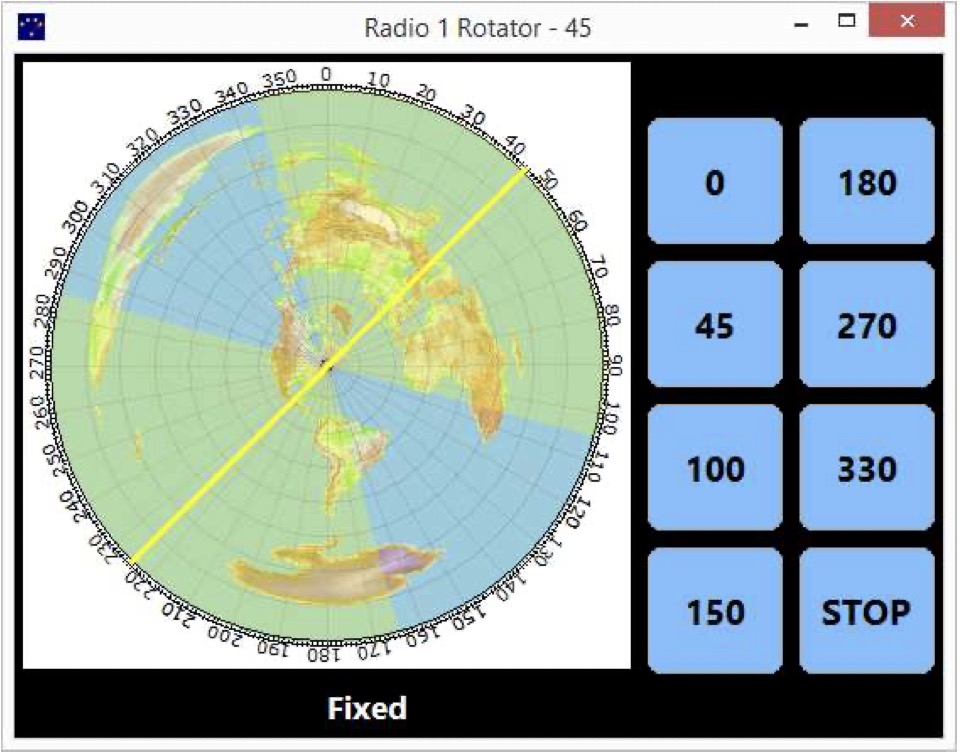
For even greater freedom, an Android client application is available, allowing you to control antennas and rotators directly from your tablet or smartphone.
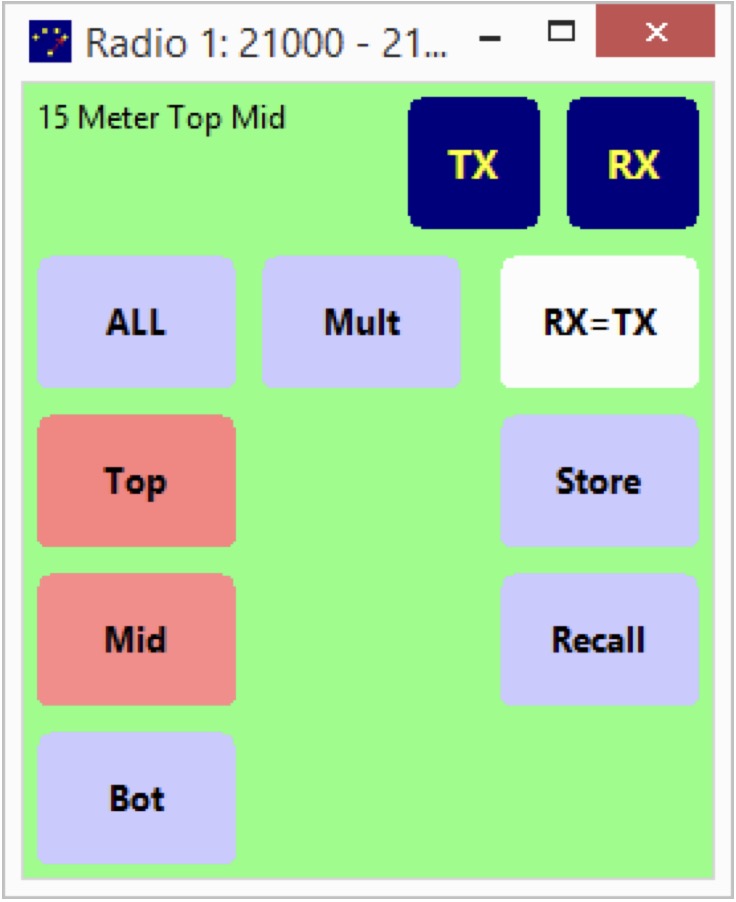
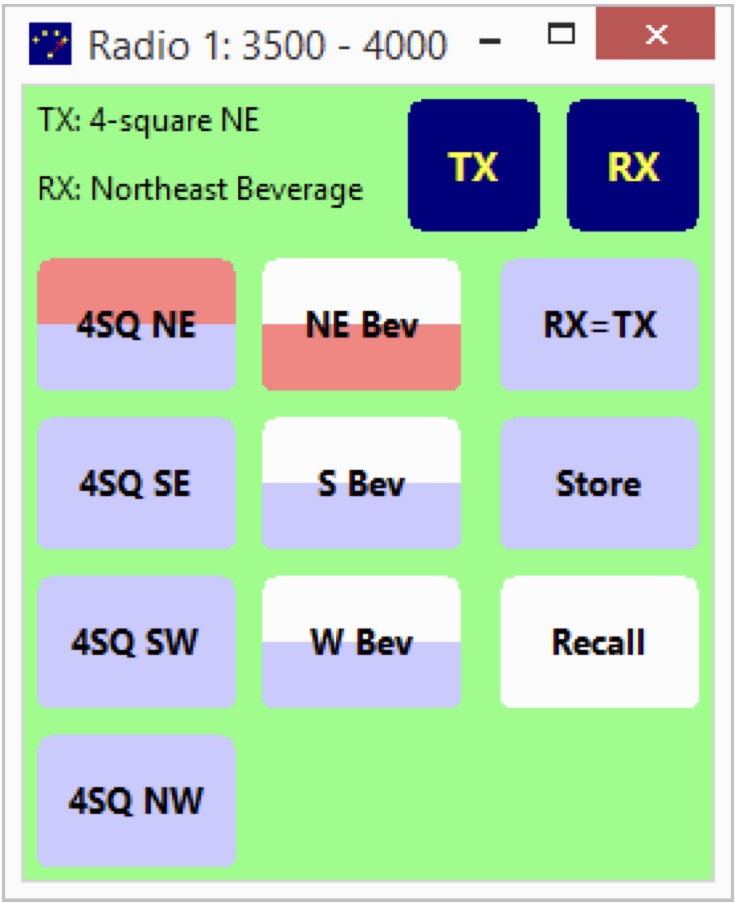
Both the Windows and Android versions offer deep layout personalization. A key advantage during SO2R or 2BSIQ operation is the ability to customize the backlight colors for transmitter status (Transmit, Receive, Inhibit). This provides the operator with instant situational awareness regarding which radio is active without having to take their eyes off the most critical on-screen information.
Safety and configuration
MOAS II provides advanced protection against hot-switching (switching with power) by hardware-blocking any antenna changes the moment transmission is detected This ensures the longevity of your relays and sensitive RF components.
It is worth noting that the initial setup may seem challenging, as JSON scripts require a precise definition of the station’s logic. However, once this stage is complete, the result is a system that makes station operation incredibly easy and intuitive. The system “knows” exactly which antennas are available for a given frequency and actively prevents operator errors.